
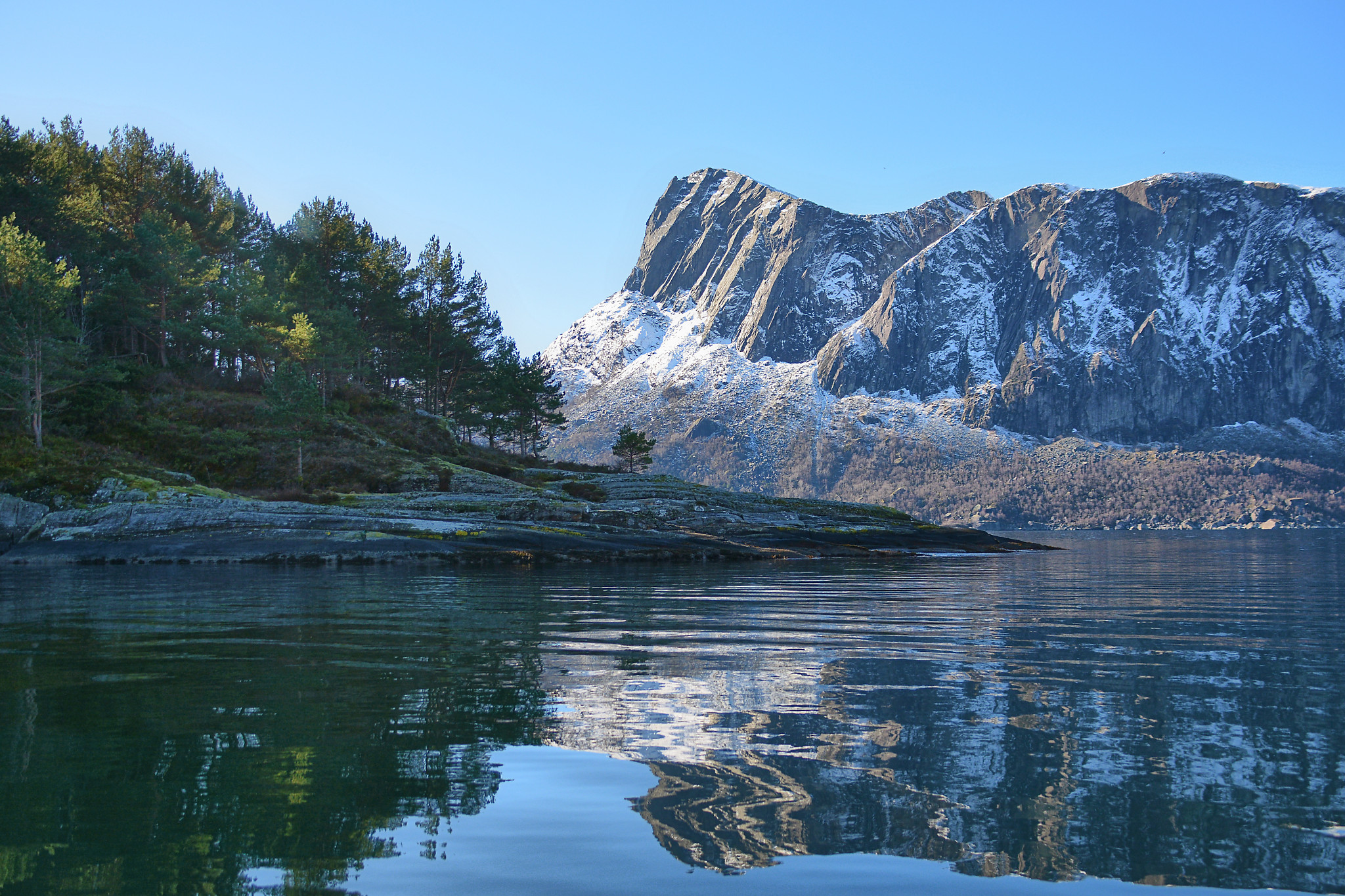
Did you know that there are around 1200 fjords in Norway. In fact, the number is so high there’s disagreement over how many! Yet, when looking at a lot of travel information and social media, you would be forgiven for thinking that there are only about four of five. You probably know them as a result, even if you haven’t been there – Geirangerfjord, Nærøyfjord, Sognefjord, Hardangerfjord, and perhaps Lysefjord. It’s really kind of crazy how much attention this small number receive. There are obvious reasons, of course. However, what you don’t often see, hear about, or read is anything about the other 1195 (or thereabouts)!
So, with that in mind, here’s a personal selection of my Top 10 hidden gem fjords in just in West Norway. It is not a definitive list, of course. Nor is it objective in any way. It’s personal, based on my own perceptions and experiences. But all are beautiful, all are interesting in many ways, and all would be worthy of your time and attention during any visit to Norway. They are in no particular order.
1. Åfjorden


Åfjorden is immediately north of the mouth of one of the most famous fjords I mentioned at the start, Sognefjord. It’s also part of Norway’s newest UNESCO recognised area – The Fjord Coast Geopark. And it’s for this reason that makes Åfjorden worth your time. As part of the geological and geographical processes that have shaped the landscape here, a huge dome of rock has created a unique fjord landscape, almost unlike no other in west Norway – an unbroken vertical cliff of rock 7km (5 miles) long and rising vertically from 400m to 700m (1300 to 2300 feet) high. Up close in a small boat it is astonishingly spectacular, and from anywhere on the east and west side of it, an impressive mountain wall that falls directly into the fjord waters below.
Add to this, Hyllestad’s Viking Age history and the fact that this fjord would have seen boats of all sizes and purposes during that period, then this fjord has just about everything. Yet very few venture here. Compared to Flåm and Geiranger, virtually no-one. Yet, come and see these cliffs, this beauty and you most definitely will wonder why that is the case – and it’s only a 25-minute detour from the main E39 Bergen – Ålesund road.
2. Arnafjorden


Arnafjord is a real and genuine hidden gem on the south side of Sognefjord. Arnafjorden has one road into it, and even that is one of Norway’s most frequently closed due to rock falls! But the road here is a surprisingly quick 30-minute diversion from Vik i Sogn on the Rv 13 road running south to north from Odda, through Voss and to Balestrand and Sogndal on the north side of Sognefjord.
In summer, Arnafjord is a fantasy landscape of steep, terraced, mountainsides, with numerous waterfalls. It’s a delight to drive around the slow, narrow road to Nes, at which point you can go no further. You’ll also see one or two hill farms perched in implausible positions on the mountain walls around. But for me, Arnafjord is also about its quiet and significant human history. There has been tragedy here and the experience of life and resistance under the Nazi occupation in World War II. These are stories that are hidden, and need seeking out, and so I am not going to detail them here – find out for yourself! Or book a tour here with me!
Experiencing Arnafjord is to experience both incredible natural beauty and the way it shapes the people who choose to call it home. For me, there is no better way to experience Norway’s fjord landscape than admiring the view together with hearing its stories.
3. Osafjorden


Osafjorden is the innermost branch of Hardangerfjord. It’s really close to Ulvik, a reasonably well-known town, famous for its cider making. But while most visitors to this corner of Hardanger come for the famous fruit drink, Osafjorden is an unseen gem, a short distance away from the beaten track back to the main Rv 13 road. Go the opposite way out of Ulvik and you are rewarded with the small, but magnificent Osafjorden. It’s a straight and narrow fjord with steep sides rising over 1000m (3300 feet).
It’s often remarked that many of the fjords in Norway have their own microclimates, based on their position relative to sunlight. Here, at Osafjorden, you have a prime example of this. As the fjord faces south and west, and is narrow and protected, in the summer months an abundance of flower species can be found here, some which only grow in this tiny little part of west Norway. That alone makes it worthy of my Top 10 hidden gems.
4. Dalsfjorden


Dalsfjorden lies in the southwestern part of the traditional district of Sunnfjord – north of Sognefjord. It’s another fjord which contains unique landscape, shaped by incredible geology and glacial history. And it’s also another fjord which many just rush past, despite it being a short diversion from the main E39 Bergen – Ålesund road.
The major mountain on the north side of the fjord, Storehesten (Kvamshesten) is, in fact, easily visible from the main road. It’s the first of a string of mountains along the northern side of Dalsfjord which are included in the new UNESCO Fjord Coast Global Geopark. You can easily see why, travelling east to west, you’ll encounter Laukelandshesten, Nore & Søre Kringla, and Fløyen. In between these, you’ll find the incredibly wide flow of Laukelandsfossen waterfall and the area’s mini version of the Hardanger bridge at Dale, complete with tunnels either side of it and a roundabout in the southern side tunnel, just like its more famous cousin.
There’s lots of interest further out the fjord, including the towns of Dale and Askvoll, before the fjord opens out into a more coastal opening. There’s coastal heritage and handcraft along the way here. I also mentioned in my previous post that this is where the migration to Iceland began during the Viking Age.
5. Norangsfjorden


Norangsfjorden can be found in the heart of Sunnmøre and, indeed, the heart of the mountain area known as the ‘Sunnmøre Alps’. It’s one of Norway’s most spectacular places, yet it’s relatively untouched by the expansion of mass tourism. Hurtigruten and Havila coastal ferries do come down neighbouring Hjørundfjorden and into Norangsfjorden in the autumn though. But the rest of the time the sleepy villages here, Urke and Øye see not so much traffic.
The trip down into Øye along Norangsdalen is perhaps one of Norway’s most dramatic and beautiful. The steep sided narrowest sections being intimidating as well as stunning. Once at Øye, you’ll see the historic Union Hotel. Here, you can step back in time to the earliest days of tourism in Norway in the 1800s. The rooms don’t have numbers, they all have names of famous occupants of the past – Grieg, Amundsen, Ibsen and Kaiser Wilhelm II.
Once at Urke you have amazing views back to the ‘Queen of the Sunnmøre Alps’, the mountain Slogen. Urke is a lovely place to stop and just chill.
6. Frøysjøen


While Frøysjøen does not have fjord in its name, it definitely is one, and it’s a very ancient sheltered channel on the east side of Bremanger in the traditional Nordfjord district. It’s still an important for sea traffic and at its northern end is dominated by Europe’s highest sea cliff, Hornelen (860m, 2822 feet). On the southern shore, opposite Hornelen, is Vingen, home to northern Europe’s second largest group of neolithic and bronze age rock carvings. However, access to these is only by boat, and only by arrangement, making it a truly unique, hidden and protected part of Norway’s coastal and human history.
You can drive down the north side of Frøysjøen, through an easy to miss short tunnel through the mountain into Berlepollen, and down to the village of Berle itself. It gives amazing views to the unique geology of the mountains on the southern side.
Doubling back to the main road into Bremanger, you can continue to the southern end of Frøysjøen and the old trading station at Smørhamn and the beautiful (and quite trendy) fishing village of Kålvåg.
7. Gulafjorden


Gulafjorden is pretty much the next fjord south from Sognefjorden on the west Norwegian coast. It’s the historical location of the old court/parliament place of Gulating (see my previous post of Viking history hidden gems). But it’s really a beautiful fjord, with a different character to many others – not so much of drama of high cliffs, but more of the ins and outs of much of Norway’s coast and how small corners of beauty are created along the way. Gulafjorden has numerous mid-fjord islands and islets. Here, the fjord itself is noted for its bio diversity and is a popular place for divers.
At Eivindvik, around the church, you’ll find two large carved stone crosses from the earliest days of Christianity in Norway. One, bears a Celtic design which shows that there was some cultural learning from neighbours across the North Sea.
The whole area of Gulen is worth a detour off the main E39 road north of Bergen. Spend a couple of hours here and you won’t be disappointed.
8. Lågøyfjorden


A completely different fjord experience is to be found among the remains of Caledonian uplift mountain building period that can be found in the Fjord Coast UNESCO Global Geopark. In particular, if you head out to the more isolated islands of Solund, you’ll be met with an otherworldly landscape shaped over millions of years.
It is a completely different landscape to the classic fjords. But this coastal area is stunningly beautiful and by using the local boat services you can find yourself in places so isolated that the life and traditions here live on very strongly. Fishing, boat building and a hardy attitude to life make for people of interesting character and the small places that they have chosen to live have a charm and an honesty that you’ll find almost nowhere else in Norway.
Boat is the way to get around, and taking the local service up to Buskøy you’ll get a good flavour of that local culture and the amazing beauty that surrounds Lågøyfjorden. There are views to the unusually shaped mountains of Solund, the equally charteristic shapes of the islands of Alden and Værlandet and legacies of the last Ice Age, with large blocks of stone deposited where the ice could no longer support them – such as the Lågøystolane.
9. Skorbøfjorden


I’d happily say that Skorbøfjorden is one of the most beautiful places I have ever been in Norway. It’s easily in my Top 10 hidden fjords as a result. Stretching out towards the coast from the beautiful village of Selje up in Nordfjord, it’s a place of different character to the inner fjords again, but with it, history, mountains in the distance, an ancient monastery on an island, white sandy beaches, rocky shorelines and incredible sunsets.
Selje alone is worth a visit to the area. It’s a beautiful village with a line of boathouses either side of the church behind them. The sandy beach here may seem unusual, but Norway’s coast is dotted with them here and there and some, if you are lucky, you can still have all to yourself. There are several both north and south along the coast from here.
Across the bay in the fjord is the island of Selja. Here are the remains of a medieval monastery can be found, and legend has it that this where St Sunniva made her stand against the pagans of this part of Norway around the time of the Viking Age. It’s long been thought that Irish monks were perhaps some of the first to arrive of Norway’s coast with the message of the Gospel. A visit to the island is just a wonderfully beautiful and reflective experience.
10. Kvernesfjorden


My final top 10 hidden gem fjord on Norway’s west coast is Kvernesfjorden. It’s the northernmost pick of them, located up in Nordmøre and just a little south of the important coastal town of Kristiansund. Its northern shoreline is the island of Averøya – which is very popular with visitors on its outer, coastal edge because that’s where the Atlantic Ocean Road can be found. But come to the other side of Averøya and you’ll find almost no visitors at all.
Kvernesfjorden takes its name from the village of Kvernes on the south easterly tip of Averøy. Here you’ll find Kvernes stave church, the youngest of Norway’s stave churches, and the only one built after the Middle Ages. It’s well worth a visit. Directly opposite is Frei, where a famous battle took place during the Viking Age – the Battle of Rastarkalv. This took place in the year 955 and was one of several between King Haakon the Good and the sons of Erik Bloodaxe.
Taking round south and west from Kvernes an impressive line of mountains guards the southern side of Kvernesfjorden. There is good farming land on the Averøya side and it’s a beautiful drive round to come back to meet the busier coastal road with its more famous tourist attraction. Kvernesfjorden is one of these places where taking a little longer way round can be incredibly rewarding.
